
AI integration for business applications
We add features based on large language models (LLMs) to applications. We build assistants that answer from your company's documents, and features that extract data from files and sort incoming requests. The model and region depend on the type of data.
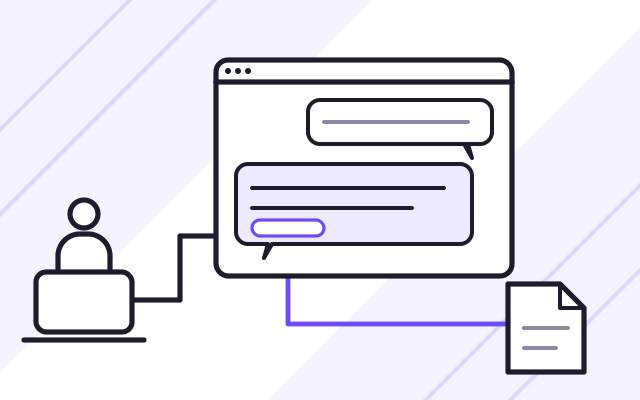
Where AI in an application saves the most time
-

Answers buried in hundreds of documents
Procedures, contracts and manuals sit in different folders. The assistant finds the relevant passages and answers the question, citing the document it used.
-

Data retyped from documents by hand
The model reads the required fields from invoices, orders and forms and saves them in the application. A member of staff approves the result instead of retyping it.
-

Requests and messages sorted manually
The model recognises the topic and urgency of a message, routes it to the right person and drafts a reply that staff can edit and send.
-

Company data must stay out of public chatbots
The model runs on your company's server or in your cloud in the EU. When we use a provider's API, we choose terms that rule out training models on your data.
When to integrate AI, and when ordinary software will do
We recommend AI where the data is unstructured: text in documents, messages from customers, questions asked in people’s own words. In tasks like these, a language model takes over work that cannot be described with simple rules.
When the data has a fixed format, for example it comes from another system through an API or from a form with fields, AI is not needed. Standard system integration is enough, and it is faster and cheaper. When decisions about people, money or health depend on the result, the model can only prepare a proposal, and a person makes the decision.
Case study: automated contract checking with AI
- Model: the smallest model in Anthropic’s Claude family (Claude Haiku) in Amazon Bedrock. Moving to a larger model needs no rebuild of the integration.
- Region: AWS in Frankfurt (eu-central-1). Contract data does not leave the European Union.
- Scale and result: about 20 contracts a month, an average of 30 minutes saved per contract, or about 10 hours of work a month.
For one of our clients, we built automated contract checking connected to the document management system the company already used. Staff did not change the way they work: they add a contract where they always have, and the check report appears next to it.
- A new contract in the document management system automatically triggers a check.
- The language model runs in Amazon Bedrock, in the AWS region in Frankfurt. Contract content never reaches public AI tools.
- The model checks the contract against a checklist agreed with a lawyer: the parties and how they are represented, deadlines, contractual penalties, termination terms, the scope of liability, and GDPR and data processing clauses.
- The result is a report with the relevant passages marked and a description of the risks for each checklist item. A missing required clause is flagged too.
- A person makes the decision: a lawyer or whoever is responsible for the contract. The report shortens their work but does not replace it.
- The system keeps an audit trail: who ran the check and when, which version of the contract the report covers and who approved it.
How Amazon Bedrock protects contract content
We chose Bedrock because its safeguards are described in the AWS documentation and can be written into the data processing agreement:
- Prompts and responses are not used to train models
- Data is processed in the region selected during configuration
- The application can connect to Bedrock privately, from a VPC through AWS PrivateLink, without going out to the public internet
- Data is encrypted in transit and at rest
- Only services with the right IAM permissions can access the model, and every call can be logged
How an AI assistant on your company’s documents works
- Documents from selected folders or systems go to the application, which splits them into passages and stores them in a vector database together with permission information.
- A member of staff asks a question in the application, which finds passages that match in meaning, even when the question uses different words from the document.
- The language model receives the question and the passages found, with an instruction to answer only from them.
- The answer goes back to the member of staff with links to the source documents.
- The application records questions it could not answer, which shows which documents are missing from the knowledge base.
We build the AI feature as part of a custom web application or as a separate service connected to the software you already use. We describe the models available in the cloud on our AWS, Azure and Google Cloud application development pages.
What we do
- Process analysis to show where AI will save time
- Assistants that answer from your company's documents, using retrieval-augmented generation (RAG)
- Semantic search across documents and the knowledge base
- Data extraction from invoices, orders, contracts and forms into application fields
- Checking contracts and other documents against a checklist and flagging passages for review, for example with models in Amazon Bedrock
- Open language models running on your company's server when documents must not leave it
- Classification of requests and messages, with draft replies
- Choice of model (Claude, GPT or Gemini) and access route (Amazon Bedrock, Azure OpenAI, Vertex AI or the provider's API)
- Answer quality testing on a set of examples from your company
- Cost and quality monitoring after launch
Who it is for
- Your staff lose time searching for information in company documents
- Your application receives documents whose data has to be retyped
- Your team sorts and answers repetitive messages by hand
- You want to use AI, but your company's data must not end up in public tools
An assistant on your company's documents (RAG)
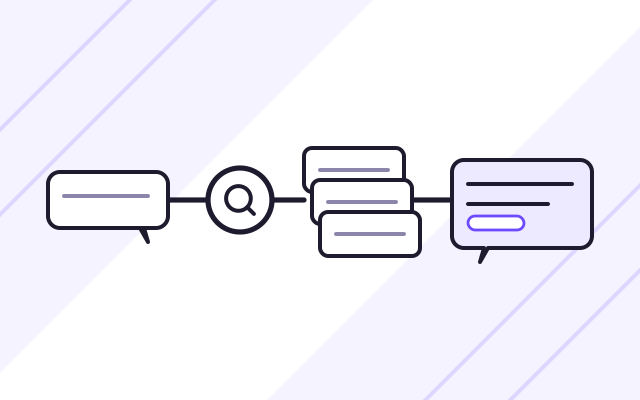
A language model does not know your company's documents. That is why we use RAG: answers based on retrieved passages. We split documents into passages and store them in a vector database, which finds texts with similar meaning, and for each question we retrieve the ones that match. The model receives the question together with those passages and answers only from them, citing the source. The assistant respects permissions: staff get answers only from documents they are allowed to read.
- Answers with a link to the source document
- Document permissions carried over to the assistant
- Knowledge updated when a new document is added
Extracting data from documents
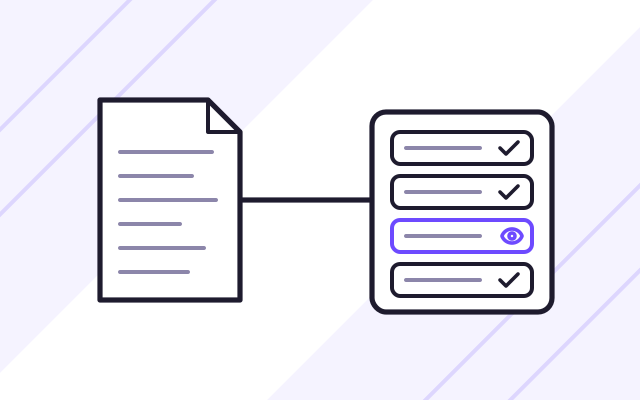
The model reads the fields the application needs from a document and returns them in an agreed format. The application checks the result against rules, for example whether the line items add up to the total, and a member of staff approves the data before it is saved. Fields the model was unsure about are flagged for review.
- Output in a fixed format, ready to save
- Rule-based checks and staff approval
- Fields that need checking clearly flagged
Model, cost and quality under control
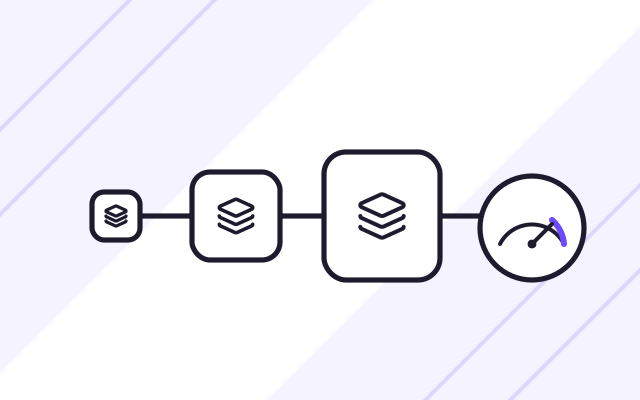
The cost of a model depends on the number of tokens, or pieces of text, it processes. Simpler tasks go to smaller, cheaper models, and harder ones to larger models. Before launch we prepare a set of examples from your company and measure answer quality against it. We run the same set again after every change of model or instructions.
- Model matched to the difficulty of the task
- Quality measured on examples from your company
- Token cost report after launch
How we work
-

Choosing the process
We identify the tasks where AI will save time and agree what data will be processed.
-

Prototype on your data
We build a prototype on a few dozen examples from your company and measure its quality before full development starts.
-

Integration with the application
We connect the model to the application and add result checks, staff approval and permissions.
-

Launch and measurement
We launch the feature, measure cost and answer quality, and refine the model's instructions based on the results.
Experience
- For a client, we built automated contract checking on a Claude model in Amazon Bedrock, connected to the client's document management system.
Security and regulations
-
The Artificial Intelligence Act (AI Act)
The regulation sets obligations for providers and deployers of AI systems. A person talking to an AI assistant should know that they are not talking to a human. The scope of the obligations depends on the use case, so for projects in high-risk areas, such as recruitment, we recommend consulting a lawyer.
Regulation (EU) 2024/1689 of the European Parliament and of the Council of 13 June 2024 laying down harmonised rules on artificial intelligence Legal status as of
Frequently asked questions
Can AI give a wrong answer?
Yes, which is why we design AI features with checks built in. The assistant answers from specified documents and cites its source, and staff approve any data extracted from documents. We measure quality on examples from your company before launch and after every change.
Will our data be used to train models?
No. When documents must not leave your company, we run the model on your server. Otherwise we use the provider's API or the AWS, Azure or Google Cloud platform, on terms that rule out training models on client data. We agree how the model runs and in which region with you before work starts.
How much does it cost to run an AI feature?
It depends on the number and length of the texts processed and on the model chosen. After the prototype we give you an estimated monthly cost for your volume of documents or queries, and after launch we report actual usage.
Can AI be added to an application we already have?
Yes, if the application has an API or access to the data the model will work on. We can build the AI feature as a separate service connected to your existing application.
See also
-
System integration and process automation
We connect CRMs, invoicing, online payments and industry systems, so nobody has to retype data by hand.
-
Custom web applications for businesses
We build systems for handling orders, quotes and purchases, with separate portals for clients, staff and managers.